

What is Vietnamese Saigon Cinnamon
What is Vietnamese cinnamon or Saigon cinnamon? If we could put a stick of true Vietnamese cinnamon into the hands of every cook, Chef and epicurean, the food world would be a sweeter, more aromatic place. We’re that obsessively addicted and devoted to this amazing spice.
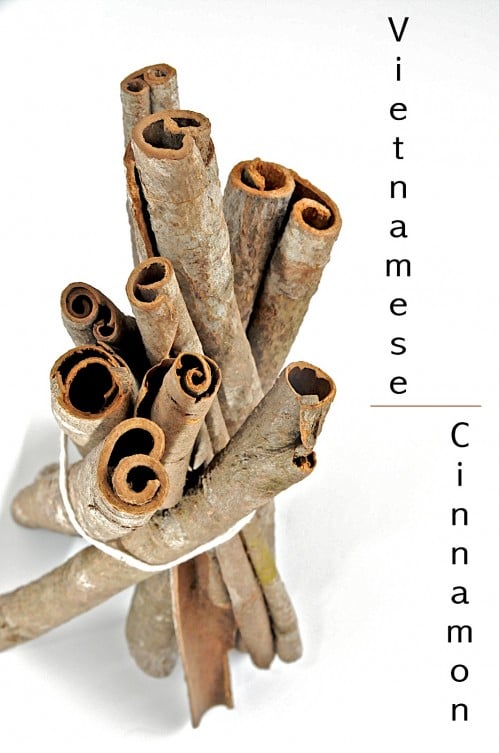
What is Vietnamese Cinnamon?
Vietnamese cinnamon comes from the bark of the Cinnamomum loureirii cassia tree that is native to the higher, mountainous regions of Central and Northern Vietnam. Regarded by many as the world’s most aromatic cinnamon, this Vietnamese variety has the highest concentration of essential oils of any cinnamon currently found in the world today. Because of the powerful amount of aromatic oils, Vietnamese cinnamon is extremely intense and concentrated with sweet cinnamon flavor. The oil concentration is so high that if you ignite the branch, it will spark!

What Does Saigon Vietnamese Cinnamon Cassia Taste Like?
It tastes like a red hot candy! Unlike other cinnamon, Vietnamese cinnamon is surprisingly sweet and robustly spicy, similar to that of a “red hot” candy. Often times other cinnamon is only subtly sweet, if at all. But true Vietnamese is sweet just like candy. It is highly prized among chefs around the world for the high level of flavor that it brings to both baked, stewed and soup stock dishes. When cooking with it, you use only a very small amount (depending on how fresh it is) to achieve the flavors that you would normally need when using a larger amount of other cinnamon.
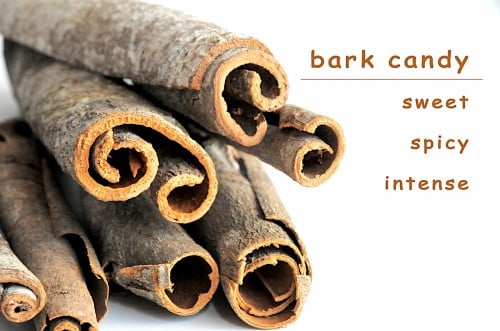
Yes, it’s true! Fresh bark off the real Vietnamese cinnamon tree is slightly mottled on the outside and burgundy on the inside and when bitten, tastes just like CANDY. My mother (Diane) grew up in Central VietNam (Quang Nam Province), and my Father grew up in Northern VietNam (Hanoi). Both grew up very close to the mountain regions where Viet cinnamon trees grow. As a child, when the cinnamon farmers would bring down their freshly harvested cinnamon down from the mountains, they would eat the fresh, soft, sweet bark like it was candy. The adults would use the fresh cinnamon bark in soup, stocks, stews and desserts.
Mom Grew Up Eating Saigon Cinnamon Fresh
My mother was so spoiled eating and cooking with the soft, fresh cinnamon bark and now calls anything that is dried as…”No Good!”. Wow, how lucky she was! Unfortunately, anyone living a little further away had to only settle for the “dried” stuff. Still, lucky bums.
Even when the bark is dried, biting into it still gives an intensely, sweet, cinnamon flavor. And yes, it still tastes like a red hot candy!
Real vs. Fake Saigon Cinnamon?
After visiting with the cinnamon merchants in Central Vietnam and interviewing people who are familiar with Vietnamese cinnamon, we learned some fascinating facts about this amazing spice.
- The BARK strips: In Vietnam, REAL Vietnamese cinnamon will be sold as long (about 12″-16″) strips of curled bark. The bark is harvested in the summer when the oil content is at it’s highest. As the bark dries, it curls.
- Beware!! Because of the high demand of Vietnamese cinnamon, many merchants will “mix” in or “add” in other varieties of inferior cinnamon.
- TASTE it for confirmation. Just take small nibble of the bark (that’s all it takes), chew and mix with your saliva. Let the bark infuse and release it’s oils. You should taste the sweet/spicy/aromatic flavors.
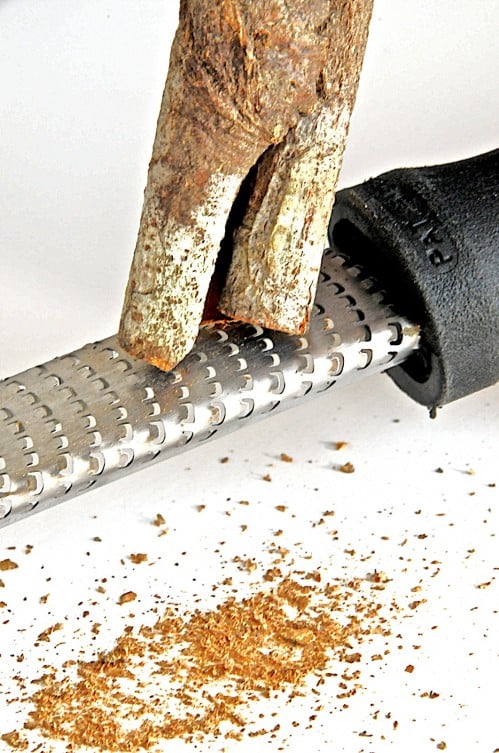
- Break it into chunks and infuse to your liquid based dishes or grate cleaned bark on a microplane grater for a powdered form. Start with just a little amount first, because of the high oil content, it can overpower your dishes with cinnamon flavors. But is that a bad thing?
- The CHIPS (broken bark pieces): Often times, spice vendors will sell it in small chips. But again, from what we’ve been told, cheaters will mix these with bits of other bark.
- TASTE it for confirmation. Again, if the taste isn’t a sweet, intense flavor kind of like a “red hot”, you are getting hosed. That ain’t the real deal.
- Depending on the size of the chips that you buy, they might be too small to grate. If that is the case, then put the broken pieces in a food processor, grinder or microplane. The already broken pieces can be tossed into your soups and sauces.
- The POWDER: Most times, Vietnamese cinnamon is sold in the powder form. From local merchant rumors in the Quang Nam Province, some companies will “blend” Vietnamese cinnamon with these other varieties of powdered Indonesian cinnamon or just plain wood particles. Because real Viet cinnamon is so aromatic, no one really knows the difference, unless you taste the PURE stuff. Otherwise, if it’s delicious to your liking, then it’s all good.
- TASTE it for confirmation: Place a good sized pinch in your palm and lick the powder. Is it SWEET? Like a RED HOT candy? If it’s not sweet, then you have a blend of other varieties. It’s been grounded down with the a different cassia variety.
- Tourist Trap in Viet-Nam: When in Viet-Nam, don’t settle for the powdered stuff so quickly. Since you’re in the homeland of Vietnamese Cinnamon, ask to see the bark or to buy the bark. Pretend like you know exactly what you are talking about, even if you don’t. If they think you are a serious buyer, they’ll bring out the “good stuff.” Then take a bite out of it, chew, mix with your saliva and look for the sweetness.
Saigon Cinnamon – It seems like the term “Saigon Cinnamon” is the most popular marketing term for this spice. It’s unfortunate because it is not grown anywhere remotely near Saigon. But spice companies seem to assume that the world would associate a Vietnamese spice with one of it’s largest cities, which might make it more marketable. My elders who live in the Quang Nam Province region are confused as to why Western spice companies call it “Saigon Cinnamon”. Would it be appropriate to label anything that came from France as…”Paris”? Or anything that was made in USA as “New York”, “LA”? This is something to think about but we like to just call it, Vietnamese Cinnamon.
Where to buy Vietnamese Cinnamon, “Saigon Cinnamon”:
- The Spice House – sells them in three forms: Whole, cracked and powder. But their whole is only about 3″-6″ long.
- Penzys Spices – calls it Extra Fancy Vietnamese Cassia and is only available in powdered form. Has anyone bought their cinnamon? We’re curious to see if it’s sweet and fragrant at all.
- Savory Spice Shop – Sells both ground and chips.
- King Arthur Flour – Only sells the ground form, but they say it best, “…tasting Vietnamese cinnamon next to supermarket cinnamon is like drinking a cup of espresso vs. coffee from a highway vending machine”. So true!!!


Ooooh! Enter me please!!! 🙂 That cinnamon sounds amazingly good! I’ll keep an eye out here as well…will ask my local spice purveyor, maybe I can convince her to stock up! 🙂
Oh this is so exciting – I would love to win some! Sounds amazing! I found this by reading about it on MattBites
Cinnamon is my favorite spice, even ahead of garlic, and I like it in both sweet and savory preparations. My favorite sweet use is on toast, which is almost embarrassing because it’s so simple. My mother would spread some butter on bread, then sprinkle a little cinnamon and sugar on top, and then toast it in a toaster oven. That was a heavenly breakfast to me. For savory, I like the flavor it adds to curry and Tex Mex chili. I’ve only bought the basic ground cinnamon and sticks that are commonly available in the U.S. and would love a chance to taste that cinnamon. 🙂
I received my order from Penzeys Spices a couple of days ago in preparation for holiday baking. After reading your post I tasted the powdered Vietnamese cinnamon and it does indeed taste sweet. I had never thought to just taste the powder on it’s own. I used to buy their Chinese cassia but once I tried the Vietnamese there was no going back. The fragrance is intoxicating, deep and strong and well, just so cinnamony. Thanks.
I’ve never heard of this distinction, though I can’t wait to try it! I’m going to Vietnam at Christmas and have a cooking lesson scheduled. Can you suggest a recipe I should ask to learn about that involves cinnamon?
Your description reminds me of the difference between regular vanilla and Tahitian vanilla.
Oh, cinnamon. So delicious in cider and applesauce and bread and brownies. I’m really intrigued with the ice cream though…
You always have such interesting articles – a true culinary classroom! Can hardly wait for the cookbook. 🙂 I love cinnamon. I LOVE cinnamon, but didn’t know 3/4 of what you just shared with us. Thank you.
Dani
http://twitter.com/blogbooktours
Ohhh…this cinnamon sounds so fabulous! I can’t wait to try some! (Win or not… I hope I find it locally too!)
Thank you for this primer – it’s fabulous! And the photography – as usual – AMAZING.
Holy smokes – someone needs to curate a collection of the finest spices worldwide. I’d love to give this a try (and see what my brother, a chef, can create with it). Thanks for the introduction – here’s hoping I’m the lucky one!
Wow–I love that it ignites!!
I wanted to let you know that I tried your Walla Walla Baked Onion, and linked your page to mine. It was delicious!
Thanks guys 🙂
Yes, please I would very much like some!
Oh god, they look gorgeous! I had no idea there was such a difference!
That sounds very precious indeed! I imagine the main reason they named it Saigon Cinnamon is because of the place’s popularity, but also the fact that it rhymes, heh 🙂 (I imagine if we’d grown a distinct kind of vanilla, people would call it Manila Vanilla. I’d just sigh and accept it 🙂
I have no idea if I’ve ever really tasted true cinnamon. I’ll be sure to look for the specialty stores now, thanks!
woowza! beautiful pics guys! I’m slightly disappointed though…. only one suitcase?! haha! I’m excited for this giveaway because cinnamon finds its way into everything I make this time of year.
I have to say, you have me completely intrigued and delighted to try out Vietnamese cinnamon. I’m imagining it totally transforming my hot apple cider recipe from great to ethereal.
Really great post. I had to read it twice because there was so much info. Have you tried it with a duck preparations?