

Principles of Photography – Exposure
In our Principles of Photography Workshop Series we try our best to share what we were able to teach ourselves about photography, in simple, easy-to-understand concepts. These are just some basics to help you get started, there is much more information to learn beyond these basics. But by understanding the most basic principles of photography then building upon them through practice, practice and more practice, you can capture the type of images that you want.
Note: Teaching and understanding photography can be often be complicated and confusing. Of course, there are many ways to explain these concepts & there is no “right” way to teach this. So if you think you can explain it better, then obviously you don’t need our help.  Now, everyone grab your camera and let’s start figuring this stuff out together! And have fun!
What is Photography? Photography is about essentially about LIGHT:
- How to harness it
- How it enters your camera
- How your camera measures it
- How to control the light to capture the images that you want
Gorgeous people, food, scenery? Who cares! The camera doesn’t care or even know if you have a perfectly plated meal, the cutest kid in the world or if you have a Brad Pitt photo op. Your camera only registers the amount of light entering your camera. That’s why understanding exposure helps you capture the photos you want.
What is Exposure?
- Your camera understands EXPOSURE, which is essentially the total amount of light entering your camera used to create the photo.
- Exposure describes how light or how dark your photographs are
- Under-exposure – is when your photos come out too dark.
- Over-exposure – is when your photos come out too light, washed out or “blown out”.
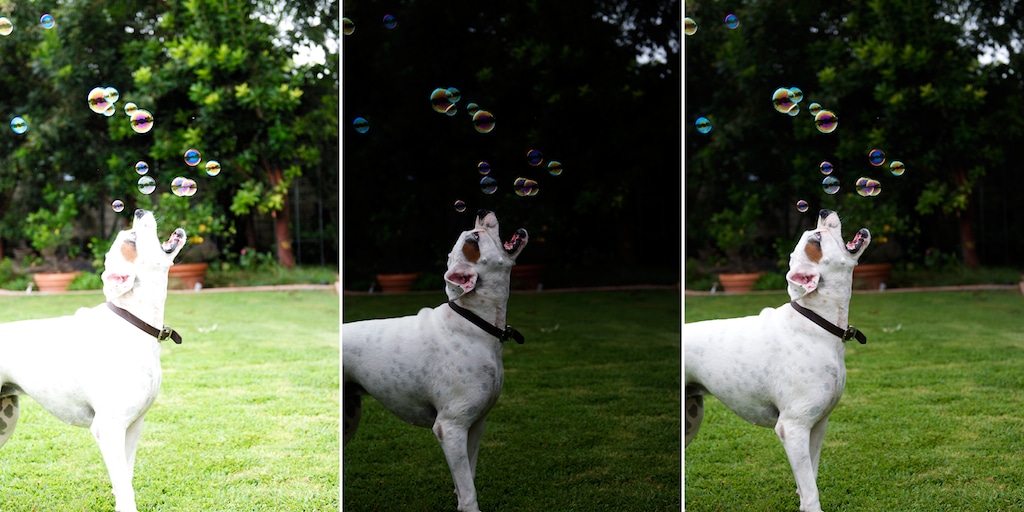
(L) Over-exposed – Too bright. The white dog is blinding. Need sunglasses. (M) Under-exposed – Too dark.The white dog looks like a phantom. (R) Nice balance of light on the dog, bubbles and grass. Awwww! Precious.
But slightly Under and Over Exposed images can be great for artistic or stylistic reasons! Images that are technically considered to be over or underexposed can be visually appealing:
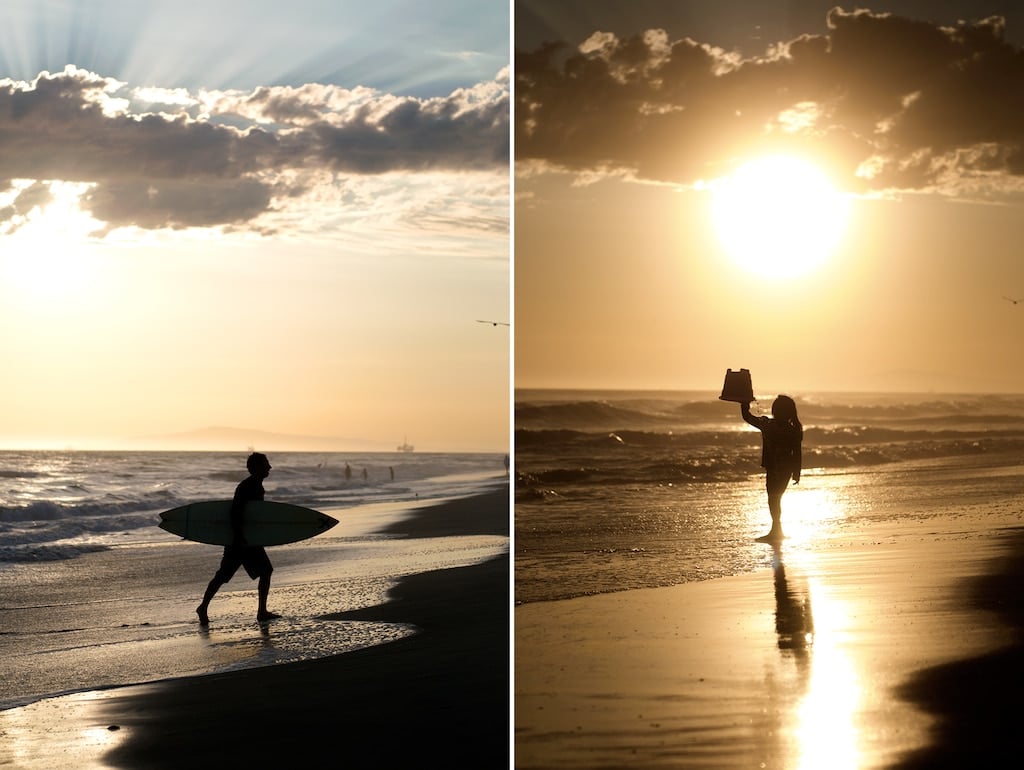 (above) Both these beach images have elements of under and over exposure. But stylistically, they can be quite beautiful from the contrasts of light and dark.
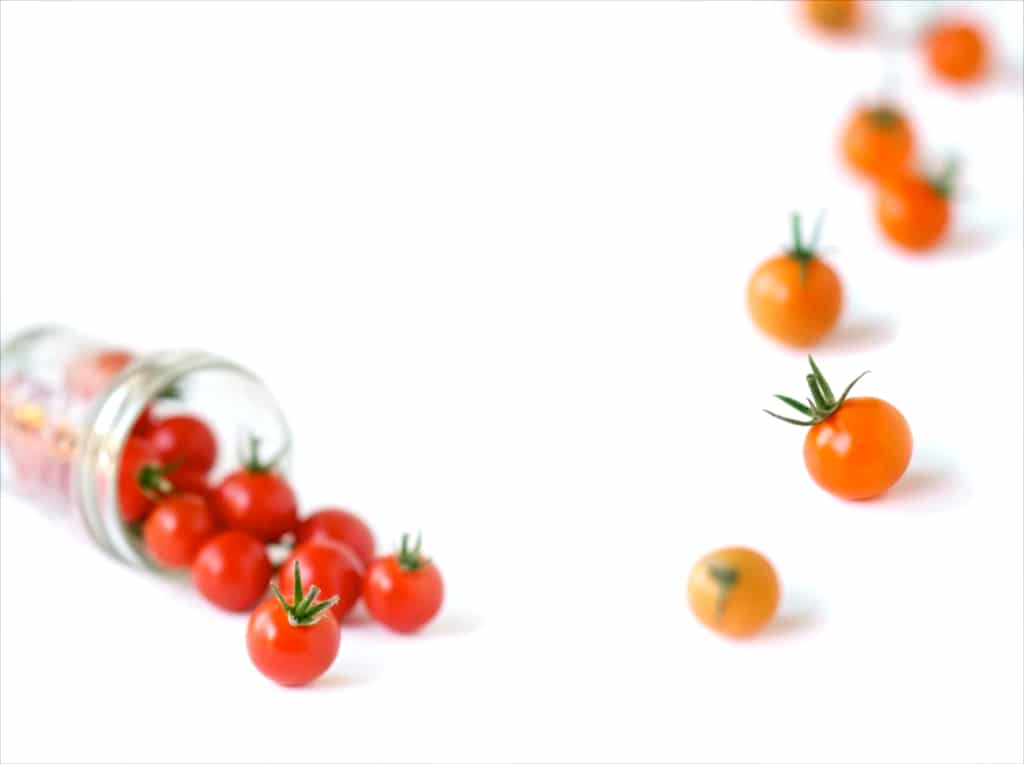 (above) Lighter, brighter tomato or food images can look pretty when shot slightly over-exposed.
How to control Exposure?
- Exposure = combination of Aperture + Shutter Speed + ISO
- Aperture, Shutter Speed and ISO are components that make up your photograph’s Exposure.
- Understanding these three main principles through your camera functions will help you get the best exposure possible for your images.
Final Thoughts on Exposure: Essentially, there really is no “right” or “wrong” exposure. Learning all the components of exposure will give you the choice and creative control of what your final results are. Photography is more fun when you can have better understanding and control of Exposure.
Next up: Understanding Shutter Speed, Part II of Exposure
**********************************************************
Photography Series: Understanding these concepts one step at a time will help you capture the images that you want. (We need to discuss basic photography principles before we jump to Flash Food Photography because photographing with flashes can be more technical. Grasping basic exposure concepts will make flash food photography easier. Thanks for your patience!)
1. Exposure
2. Shutter-Speed – “Controlling Motion”
3. Aperture – “Controlling Depth of Field”
4. ISO
5. White Balance
6. Flash Your Food Photography #1- Using Built-in Camera Flash for DSLR and Point & Shoot. Includes some tips to making your own accessories.
7. Flash Your Food Photography #2- Using Speedlight Flashes ON the camera
8. Flash Your Food Photography #3 – Using Speedlight Flashes OFF the camera with remotes, sync cords, triggers and commander mode. (Cool cocktail shots will be highlighted here! )
9. Flash Your Food Photography #4 – Using multiple Speedlight Flashes or Strobes OFF the camera. Short discussion of Dedicated vs. Non-Dedicated flash mounts.
10. Natural light Food Photography
11. Photography inside restaurants, kitchens and capturing Chefs in action.
12. Editing
[ad]




As a photographer, I have to say that your advice is spot on and great for the amateur wanting to learn more.
Otherwise, please please please … 🙂 … it’s “photos” – no apostrophe. Photos = plural of photo. Photo’s = possessive – as in “the photo’s corners were bent”.
Sorry to be pedantic, but it’s one of the things that really bugs me. 🙂
Kara- LOL! thanks for the lesson. We’ll fix it asap! 😀
Fantastic overview of exposure… I’m really looking forward to the rest of your series on photography! While my photos have definitely improved since I started my blog, I still have a lot to learn, and love to do so!
Great Topics, Great series one of my favs!
As someone who’s self-taught, I often have no idea what the hell I’m doing, though I’ve been able to produce photos I’m very proud of. I can’t wait to learn the whys and hows to help me fill in the blanks and replicate some of my “luckier” shots. There’s nothing worse than taking a great picture and not really knowing what you did to get it that way!
Cheryl- Your photographs are beautiful. But it certainly does helps to continually fine tune your skills and understand photography to take your work to a higher level. We want to show people the liberating feeling of having more creative control over your photography work!
Thanks, great topic for a series, I’m looking forward to more. Your photos are wonderful.
so excited about this series – thanks in advance for you help!
Thank you for posting this. I really enjoyed your presentation at Blogher Food. It is good to have a recap though, I have lots to learn. Your photos are always stunning. Thanks for helping us out!
Those beach scenes are dreamy…I’m excited about this series and am grateful you’re taking the time to provide us with this valuable information.
Thanks for the info. I’m a simple point a shoot person but I think playing aorund with my camera will produce some great shots for my blog and scrapbooking.
This is exciting! When I take a photo it is usually a surprise if it turns out well– I look forward to reading some more of your tips & tricks. Thanks!
I am so excited about this series, especially the “simple, easy-to-understand concepts”.
Would you be willing to write a post about how to set-up a home photo studio, without too much space and without too much money. Is that possible?
Jessica – Of Course! Each topic, if it applies, will have photographs on home studio set ups.
Awesome!
This is fantastic! You guys are so generous to share your expertise…thanks and looking forward to the series!
Enjoyable series. I see the word “flash” and I shudder.
i love how you point out that it’s not really about the camera, but about the light. for people like gastronomer and i, it’s hard to control light when you’re at a restaurant or eatery. the best thing to do is go during daylight and pick a good seat, or else you may not have much choice. for food blogging at home, well, i have a perfect place in my house that gives me great light, so i’ll use that for when i’m cooking. great point though, good photography starts with light and exposure.
Thanks for posting this. I admire those two bloggers you’ve mentioned above. The are brilliant photographers even with a point and shoot.
As a proud new owner of a DSLR, I am REALLY looking forward to this series! Thanks, guys!